Responding to your MP and UKTI
Thanks to everyone who has contacted their MP and Vince Cable to call for an end to government support for the arms trade. Together, we've reached over 400 MPs. Lots of you are now receiving replies from your MP - and it is very likely that you've received a standard response from Mark Prisk, Minister of State for Business and Enterprise, or from Paul Spencer of UKTI DSO.
Please consider replying to your MP with a personal letter. Responding to their arguments will show this is an issue of real concern to their constituents and will mean they'll have to give the issue more thought - and if they do that we hope they'll support the campaign!
To help you, we've responded to the main points that have been raised by MPs, and in
UKTI DSO's letter,
PDF
(895k)
below.
- "Every country has the right to defend itself"
- The Government only supports "legitimate defence exports"
- Bribery and corruption
- Exports and jobs
- Strengthening strategic links
- "Government support for defence exports is proportionate"
- Defence export subsidies
- Arms Trade Treaty
- "Britain needs an arms trade to support its own armed forces"
"The Government supports legitimate defence exports. In accordance with Article 51 of the UN Charter, every country has the right to defend itself. As not every country either has or wants to have its own defence industry, some level of international trade in defence goods is essential.
One article of the UN Charter recognises the right of every country to defend itself. However, purchasing countries are not assessed as to their 'defence' needs. Governments use the term 'defence' to cover any military matter, from 'homeland security' to invasion.
More importantly, the main aim of the Charter and the reason why the UN was founded is to maintain or restore international peace and security and to make sure that no country has to resort to Article 51. Most of the 100-plus countries that receive UK arms are not allies and it is difficult to envisage situations where the unrestricted sale of arms would lead to an increase in security rather than have the opposite effect. Security needs to be seen in much broader terms that are not dominated by arms companies' interests.
It is questionable whether arms exports to countries with appalling human rights records – countries that are considered as "countries of concern" in the government's own human rights report – and to countries like Pakistan and India or China and Taiwan that are engaged in an ongoing conflict serve the purpose of the UN Charter.
Back to topThe Coalition Programme clearly stated 'We will support Defence Jobs through exports that are used for legitimate purposes, not internal repression...'. The Government will use their export licensing powers to ensure that the UK only permits responsible defence exports, a policy which will be based on the EU Common Position on Arms Exports. Export licences will be refused, for example, if:
- there is a clear risk that the export would be used for internal repression, or
- the export would be used to provoke or prolong an armed conflict, or aggravate existing tensions
- there is a clear risk that the recipient would use the export aggressively, or to assert a territorial claim.
The Coalition Programme states that defence exports will be supported for legitimate purposes - but it remains
unclear what "legitimate" means.
In the past, military equipment exported by the UK to Israel was used in Lebanon and Gaza.
Arms were sold to Argentina used in the invasion of the Falklands, to Indonesia used in East Timor and Aceh, to
Iraq and Afghanistan – who knows how they will be used in the future.
(For the full list of recipient countries click here
PDF
(895k)
.)
The fact that almost all licence applications for arms exports have been granted is a worrying sign. It is impossible to be sure that the military equipment that was exported to China, Israel, Sri Lanka, Thailand and other countries isn't used for internal repression. It is likely that exports to India as well as to Pakistan, will aggravate the conflict over territory in which the two countries are involved. It certainly does nothing to calm the situation.
Back to topThe Government will also take account of the track record of the buyer country within the international community, the risk of undesirable diversion or re-export, and the technical and economic capacity of the recipient country (i.e. whether the proposed export would seriously hamper the sustainable development of the recipient country)."
If the government indeed takes account of a buyer country's track record in the international community and its economic capacity, it is quite disturbing that weapons were sold to countries like Libya, a country with a leader who doesn't care too much about his country's reputation regarding human rights in the international community, as well as to countries like South Africa or Angola, developing countries with thousands of people living in great poverty.
Back to top"The Government will also reinforce industry's own determination to conduct defence exports in an ethical way. Vince Cable, The Secretary of State for BIS, spoke out strongly against corruption whilst in Opposition, and the implementation of the Bribery Act now underway will strengthen the international enforcement regime."
Transparency International rates the arms industry as one of the most corrupt business sectors. One commentator has stated that it is "hard-wired" for corruption, given that deals are often large, complex and shrouded in officially-sanctioned secrecy. Arms companies have regularly been faced with allegations of corruption. Occasionally there are convictions, but, as experience shows investigations are hard to start and even harder to bring to court. The UK's Serious Fraud Office, for example, began investigating BAE Systems deals with Saudi Arabia in 2004. However, following pressure from those under investigation (BAE and Saudi princes), the Government stepped in to stop the investigation in December 2006.
Back to top"Let me turn now to the role of the UKTI DSO in promoting exports. Current policy starts from a recognition that advanced engineering, including defence and security goods, forms the largest goods export sector and includes the defence and security industries. Defence actually contributes a higher rate of net exports than most other goods sectors and employs about 300,000 people, mostly in high-quality jobs."
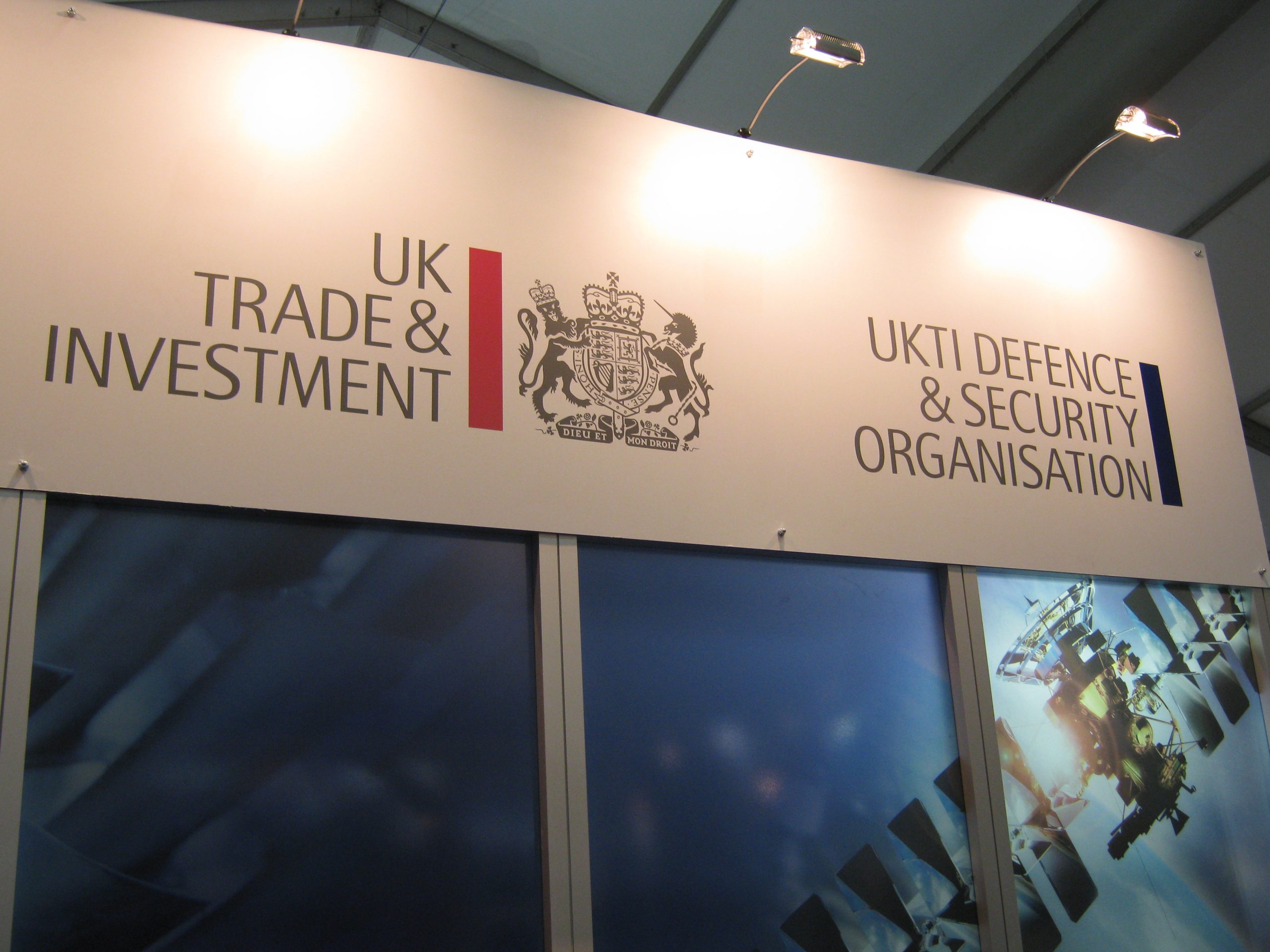
UKTI DSO's role is to maximize arms companies profits by promoting their international deals. Whether or not advanced engineering is the largest goods export sector, arms contribute only 1.5% of all UK exports. This number is derived from the government's own statistics [1] and should therefore be reliable. Moreover, around 40 per cent of the content of these exports is imported in the first place.
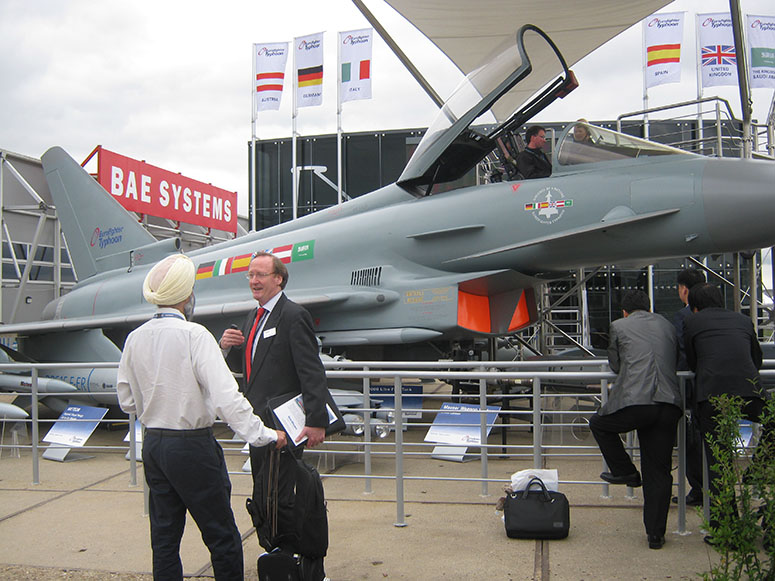
Furthermore, buying countries increasingly want to have their share of the production process. The sale of Eurofighters to Saudi Arabia illustrates this. Two thirds of the 72 Eurofighters sold to Saudi Arabia are to be assembled there. Similarly, recently 57 Hawk jets were sold to India. They will all be manufactured under licence in India by HAL. It has been widely reported that the £700 million pound deal will result in only 200 UK jobs.
According to the Government's statistics [2], 65,000 jobs (0.2% of the UK workforce) are directly or indirectly involved in exporting arms.
The subsidies that these export jobs receive, along with the financial support provided to companies producing arms for UK military (not least the massive Research & Development funding provided by the taxpayer) are resources that could be far more usefully and productively used elsewhere. It is only this public money that gives the arms companies the ability to promote a cutting edge image and allows them to draw in skilled workers. The resources would be better invested in green technologies. That way the engineering skills now used to manufacture weapons could help us tackle real security threats like climate change. The benefits of such a move would extend beyond national security, providing a vital boost to a sector that has vast earning and employment potential.
Back to top"These sectors' exports can also support important strategic links, including those beyond Europe and North America where the Government intends to work to strengthen relations with the fastest-growing areas of the world economy, while standing firm on human rights in all bilateral relationships."
Sadly many countries identified as 'key' or 'emerging' markets are in the grip of conflict or have concerning human rights records. Selling arms to these countries is a very strange way to foster a relationship.
Back to top"Government support for defence exports is proportionate with other UKTI sectors. The number of DSO staff in UKTI Headquarters (actually around 150) reflects the different nature of its business with its emphasis on government-to-government support for commercial campaigns, and contact with other UK Government Departments. By contrast, much of the business across other UKTI sectors is delivered direct to companies by staff in the UK regions or by the staff who work in about 100 overseas markets. Like all aspects of the Department's work, the work of DSO will be critically reviewed over the next few months in the context of the Comprehensive Spending Review."
Whether 150 (Vince Cable says 160) or 180 (the latter figure is drawn from the UKTI Corporate Plan 2009-11), UKTI DSO numbers are disproportionate because the staff in UK regions & overseas markets support arms as well as other sectors. As UKTI DSO webpages state, "The Regional Directorates can help you interpret requirements, highlight opportunities, and actively assist with your marketing activities. They can provide specialist advice through their own knowledge and access to the wider UKTI network (both in the UK and overseas) - including their own specialist embedded UK military personnel, access to defence and security experts based in several UK Embassies, High Commissions overseas, and other Government Departments." [3]
Back to top"Your claim that defence exports are heavily subsidised appears to be based on an external study "Escaping the Subsidy Trap" published in 2004 on behalf of British American Security information Council (BASIC). Whatever the wider rights and wrongs of arms exports and government support, that particular study almost certainly understated the benefits to the defence budget from defence exports, and overstated the costs of Government support to defence exporters."
A number of studies, including the BASIC report, have shown areas of substantial subsidy to arms exports [4]. However, if UKTI DSO has information as to how the BASIC study underestimates the benefits and overestimated the costs, we would be grateful if this could be published.
Back to top"I am pleased, therefore, that the new Government has made a firm commitment to support efforts to establish an International Arms Trade Treaty to limit the same of arms to dangerous regimes".
An Arms Trade Treaty (ATT) will make no difference to UK sales and the work of UKTI DSO.
While, in principle, the ATT could strengthen the hands of governments trying to prevent the circulation of small arms, it does not address the wider arms trade and problems associated with it.
The Foreign & Commonwealth Office (FCO) has said that the ATT will not prevent any UK sales. This was reinforced by the Defence Manufacturers Association's DMA News, Jan 2006, which said the DMA believes "the eventual Treaty would not bring new obligations for UK industry." It is clear that the deals the companies find most lucrative, such as those to Saudi Arabia, Israel, India and Pakistan, would continue unabated. The ATT is supported by the arms industry; unsurprisingly, since the FCO says it: "will be good for business, both manufacturing and export sales."
As currently envisaged by the UK government, the ATT allows the Government to create the impression it is taking action, whilst it continues to support the arms companies in their deadly business.
Back to top"Britain needs an arms trade to support its own armed forces"
Government support for arms exports serves the interest of international arms companies – not the UK's armed forces.
Arms promotion benefits business, not the UK armed forces
UKTI DSO has been set up purely to promote arms companies weapons sales and that is what it does. Whether or not this might assist the UK armed forces is completely outside the organisation's remit or thinking. It seems its main concern regarding the armed forces is how they can help UKTI DSO help arms companies sell arms.
Exports do not guarantee 'security of supply' for the armed forces.
It is sometimes argued that military exports can guarantee the supply of arms for the UK armed forces by keeping production lines open in the UK. However, the arms companies that are supposed to provide the guarantee of supply are international businesses, which source parts from around the world. Any sizeable piece of equipment includes many overseas components and sub-systems.
An arms company's goal is to make profit for its shareholders, not to serve a particular country's national interest. There would be no reason to expect a company like BAE to put the UK armed forces before those of any other of its major markets.
Alternatively, it is argued that arms exports may reduce industry's fixed overhead costs and thus lower the cost of equipment bought by the MoD. This, however, ignores the subsidy and support given to arms exports. The total subsidy is difficult to calculate, but even the MoD, in its 2005 Defence Industrial Strategy, admitted that: "... the balance of argument about defence exports should depend mainly on non-economic considerations." No independent study seems to have been undertaken which supports the argument that arms sales are good for the economy.
If the Ministry of Defence is buying equipment for the UK armed forces, it is extremely likely there will be significant domestic and imported content whether or not the tender is won by a UK-headquartered company.
In the recent light tank competition between BAE Systems and General Dynamics UK (UK subsidiary of a US-headquartered company), both played the jobs card: General Dynamics claiming, extravagantly, that it would safeguard or create 10,500 jobs while BAE said it would create 400 jobs and reverse the redundancy plans for 400 more. Both claimed that around 80% of the components of the vehicles would be sourced from the UK while acknowledging that the chassis would be produced abroad (in Spain by General Dynamics or in Sweden by BAE).
The reality of the international arms trade and Ministry of Defence procurement is that the UK military can have both production in the UK and its armoured vehicles/helicopters/fighter planes whether or not the Government goes out of its way to promote arms exports.
Exported arms could be used against the UK's armed forces.
Political situations change, often rapidly. But the drive to sell arms means that arms export licences are almost certain to be granted unless the buyer is actively hostile at that moment.
- A wide range of arms were sold to Argentina despite the dispute over the Falklands Islands. The Ministry of Defence approved a delivery of naval spares just 10 days before the 1982 invasion
- In the six years prior to the Iranian revolution in 1979 the UK supplied 875 Chieftain tanks to the Shah which became the property of the new Islamic republic.
- It is hard to see how the recent UK pushes to arm, for example, Libya and Algeria are likely to increase the UK's security. The risks are easier to envisage.
Exports can mean the armed forces lose out.
The relationship between the Government and arms companies means that companies' requirements are given undue weight when the Ministry of Defence is deciding on equipment for its armed forces. This could be at the strategic level of prioritising massive weapons projects such as nuclear submarines, aircraft carriers and fighter aircraft over equipment being used by soldiers on current operations. Or it could be at the level of deciding which item of equipment to buy to meet a particular requirement. For example, money has been thrown at AgustaWestland to produce helicopters that are less powerful and later arriving than alternatives built overseas.
There is added pressure on the Government to buy from UK-headquartered companies in that overseas arms buyers like the selling country's armed forces to be operating the equipment it is considering. When, in 2003, BAE was trying to persuade the RAF that it wanted to buy new Hawk fighter training aircraft, a prospective sale to India was brought into the equation. If the UK went for a different aircraft then BAE would be unlikely to be able to close the India deal. Despite the treasury wanting to put the deal out for tender in order to save, it estimated, £1 billion, the contract went to BAE, and India followed suit.
Notes
- DASA, UK Defence Statistics, 2008, Table 1.14.
- UK Defence Statistics 2009: http://www.dasa.mod.uk/modintranet/UKDS/UKDS2009/c1/table110.html [29.07.2010].
- How we can help - UKTI DSO services: https://www.uktradeinvest.gov.uk/defencesecurity/uktidsoservices/localisation/print/107130.html [30.07.10].
- /issues/subsidies.php
Have we missed something? Please let us know if there's an argument we've not covered - email campaign(at)caat·org·uk. We'd also be really grateful to see any response you receive from your MP. (Thank you to everyone who has already passed responses on!)
If you need further help or prefer to send CAAT's standard response, email campaign(at)caat·org·uk or call 020 7281 0297.